
The University of Kinshasa Wins the "Impact & Exploration" Award at NGEA 2026
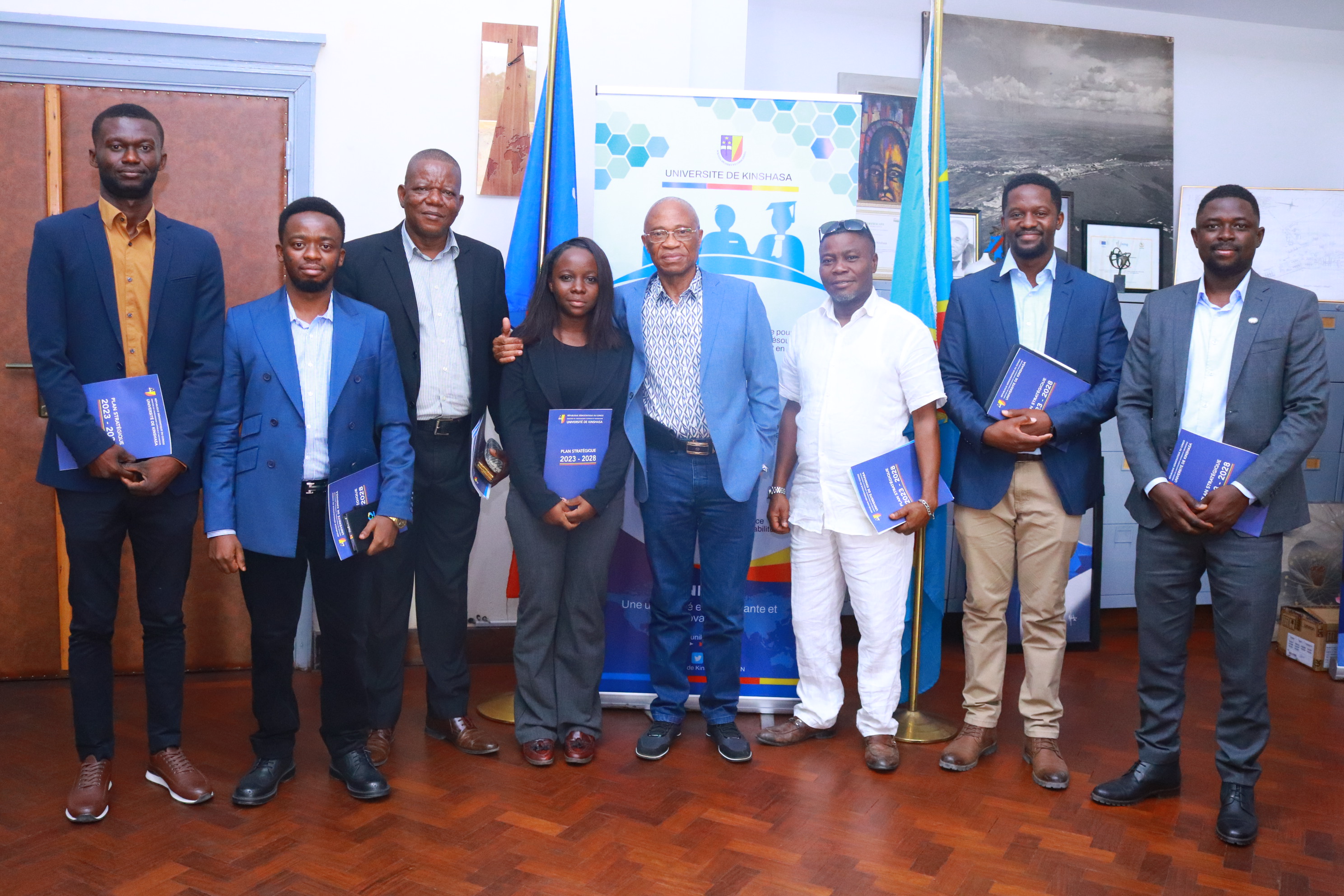
The University of Kinshasa has written a new chapter in its academic and scientific history thanks to the remarkable achievement of the Bana Kongo team, winners of the "Impact & Exploration" Award at the prestigious Next Generation Explorers Award (NGEA™) 2026.
The NGEA™ is considered one of the world's most respected student competitions in the field of mineral exploration. Organized in partnership with the Prospectors & Developers Association of Canada (PDAC) as part of its annual convention—which brings together over 27,000 professionals, researchers, students, and decision-makers from more than 125 countries—this challenge pits international university teams against each other to produce innovative geoscientific interpretations and exploration targets based on real datasets provided by public and private organizations.
At the heart of this competition is the ambition to train the next generation of mining explorers capable of integrating complex geological, geochemical, geophysical, and environmental data, adopting interdisciplinary approaches, and proposing relevant solutions to the current challenges of responsible exploration. For nearly a year, teams commit to analyzing heterogeneous datasets, interpreting the deep geology of the studied regions, and prioritizing exploration targets—much like a professional team in the field—while developing their skills in scientific communication, collaborative work, and strategic decision-making.
For the 2026 edition, the Bana Kongo team worked on a regional dataset covering the Kunene area in Namibia, where they generated exploration targets for Ni-Cu-Co (Nickel-Copper-Cobalt) mineralization. Their approach integrated lithospheric architecture, structural analysis, geochemistry, and targeting logic to propose consistent and technically defensible prospective zones. Beyond the Namibian context, the methods developed have direct implications for comparable geological environments in the Democratic Republic of Congo.
The University of Kinshasa’s Bana Kongo team perfectly illustrates this educational and scientific ambition. It is composed of three postgraduate students (DEA) in Geosciences—Ridi Diakondua, Trésor Hubert Kawaya, and Dieu-Merci Kula—as well as Grace Mpaka, a law student. This interdisciplinary composition allowed the team to approach the data with creativity, rigor, and sensitivity to the socio-economic and regulatory issues of mineral exploration.
As the only African team among the six international finalists, Bana Kongo distinguished itself through the relevance of its exploration objectives, the consistency of its integrated geological model, and the potential impact of its proposals. Their presentation convinced the international jury of specialists, who awarded them the "Impact & Exploration" Award, recognizing the team that produced the most significant interpretation in this specific field.
This distinction represents major international recognition for the University of Kinshasa and its students, demonstrating that young Congolese researchers possess not only the necessary academic excellence but also the capacity for innovation and leadership expected on the global stage.
The University of Kinshasa warmly congratulates Bana Kongo for this exceptional performance, which inspires the entire university community and places the DRC at the center of excellence for training in geosciences and responsible mineral exploration.
Articles similaires
18/09/2026
Lire la suite →
18/09/2026
Lire la suite →
14/09/2026
Lire la suite →
03/09/2026
Lire la suite →
06/08/2026
Lire la suite →
05/08/2026
Lire la suite →
04/08/2026
Lire la suite →
04/08/2026
Lire la suite →